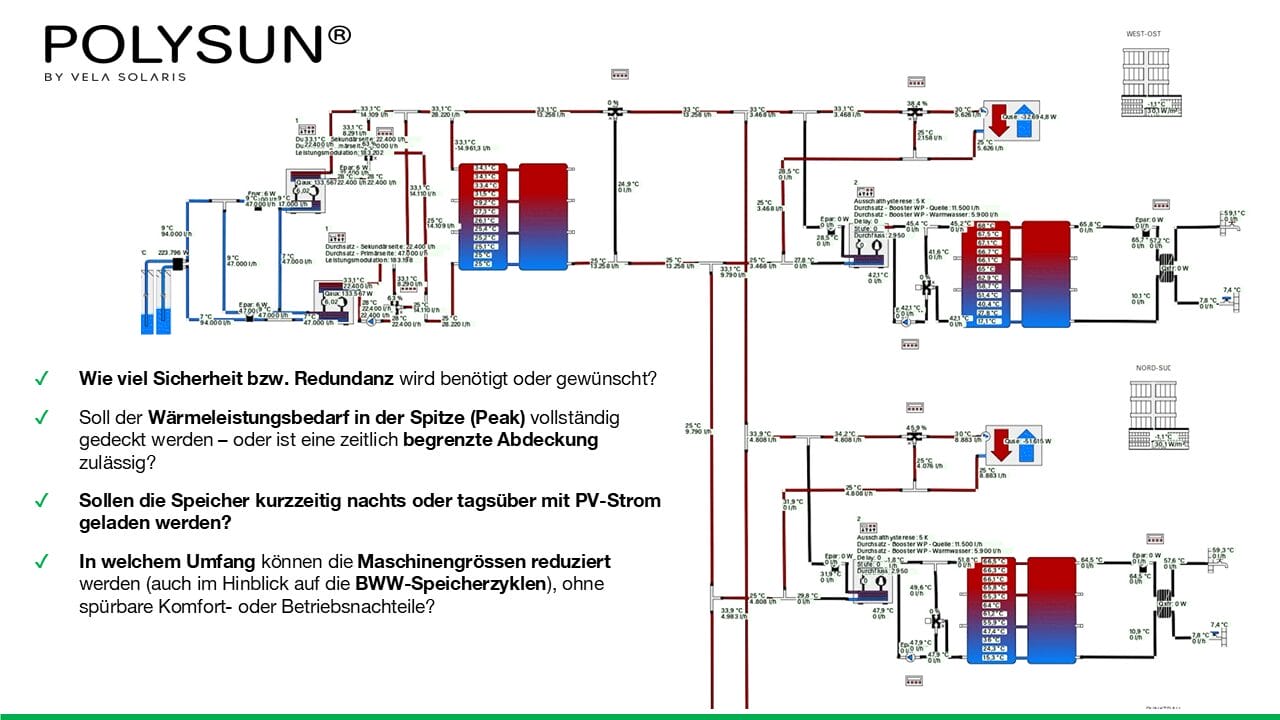

How much redundancy does an energy system really need? Do power peaks have to be fully covered - or are time-limited peaks permissible? What is the optimum machine size to ensure comfort or operational safety?
For heating and cooling systems, dynamic simulations offer new opportunities to clarify these questions precisely. The example of the Uferweg development in Burgdorf (176 flats, 23,000 m², investment volume approx. CHF 50 million) clearly demonstrates the added value of dynamic system simulation:
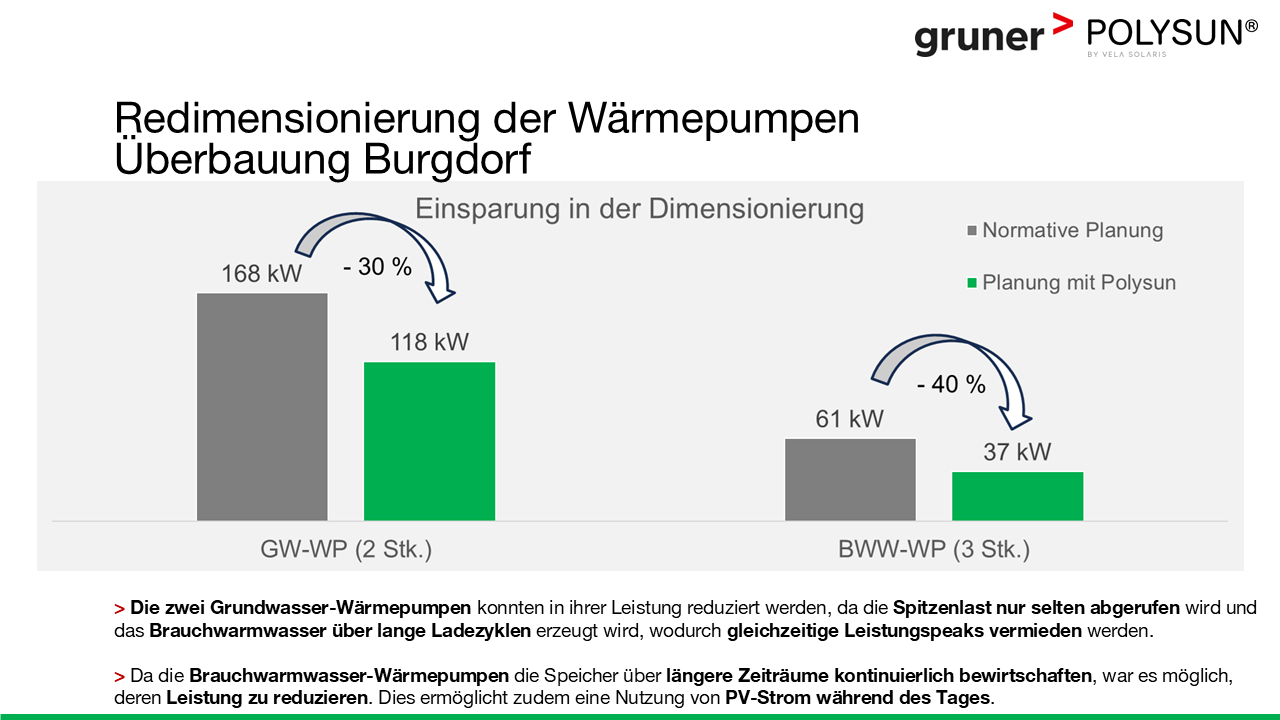
- Peak loads are largely avoided / rarely occur thanks to intelligent control strategies
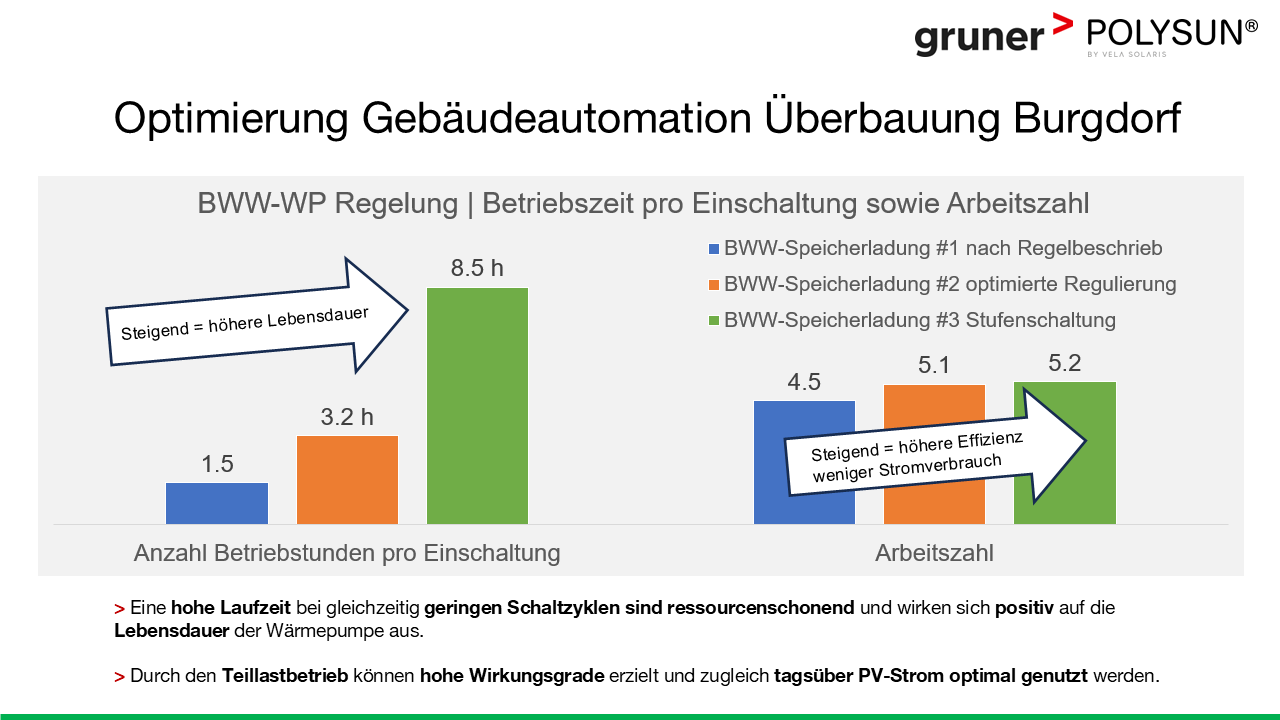
- Long running times with low switching cycles increase the efficiency and service life of the heat pumps
- Part-load operation enables high efficiency and targeted utilisation of PV electricity
- Reduced heat pump outputs with the same supply reliability (smaller appliance size, less space required for control centres)
Result:
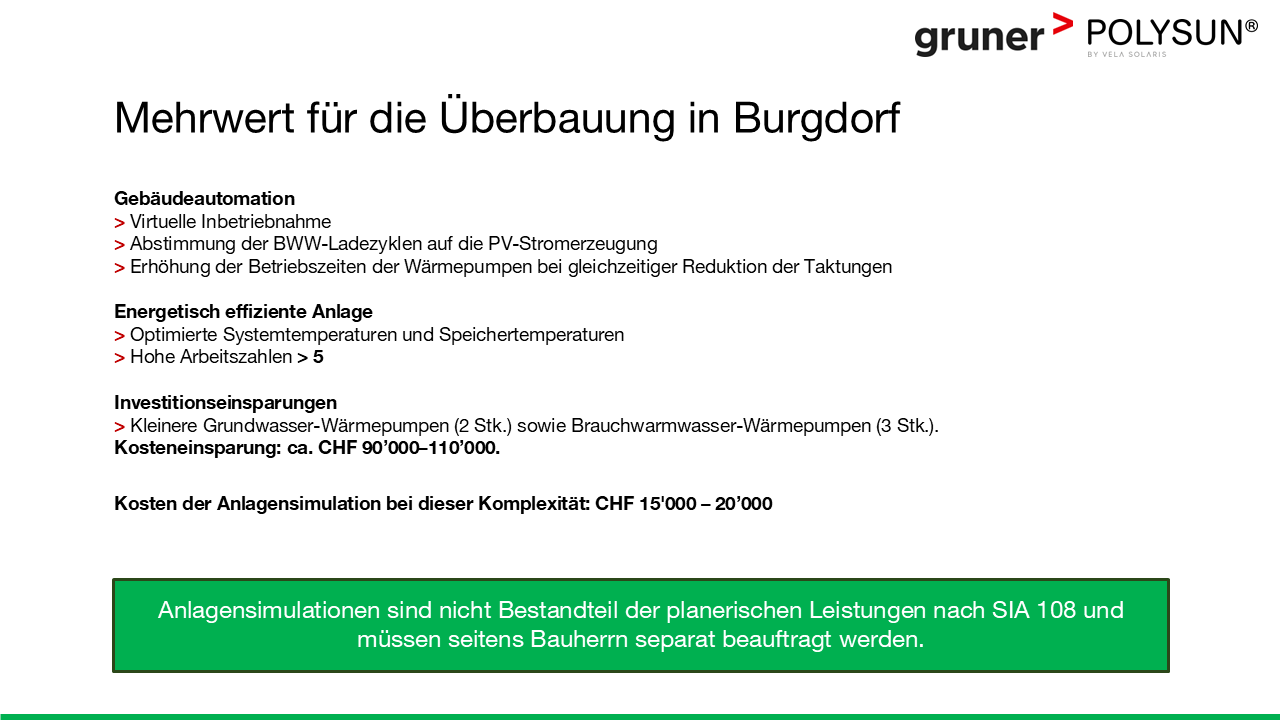
A targeted simulation investment of CHF 15,000-20,000 can save CHF 90,000-110,000 in investment costs - with a high degree of planning security at the same time.
The Uferweg development project in Burgdorf was realised by Gruner Bauklimatik in co-operation with Velasolaris using the simulation software Polysun and demonstrates the added value that dynamic simulations offer in the planning of sophisticated systems and heat pump cascades.
Especially with multiquell heat pump systems and heat pump cascades the use of SIA-380/2-compliant dynamic simulations is recommended in order to:
- sustainably reduce investment and operating costs
- Identify the optimum system variant transparently and at an early stage
- Dimension machines according to requirements and avoid oversizing
- realistically check and optimise control strategies and operating modes
Building services engineering and air conditioning | Gruner AG
Planning software for energy systems | Polysun